Revise with Me: A blog series on the revision process
One of my 2026 goals is to revise a chapter from my dissertation into an article, and I thought I would take the opportunity to write a series of posts about my process and what it brings up. If you are a writer, you are by default also someone who has to edit and revise your own writing. I hope this blog series is helpful and relatable, because one of the most valuable things to know is that you’re not alone.
Deciding to revise writing for publication
This decision process looks different for everyone. Many people don’t have a choice, if they have to publish to maintain their job and advance in their academic trajectories. To say that this puts a lot of pressure on the writing process is an understatement. While some steps might be easier than others, no step of the process is exactly easy, and it can be a long road to publication.
Knowing that it can be a long road can also make this decision a hard one for those who aren’t required to publish. Still, there are advantages. For me, it’s a choice I’m making for a few reasons. First, it puts me in the shoes of the writer again, which is valuable for a freelance editor. I want to be able to best support my clients as they experience the highs and lows of the long writing process. Second, I spent years researching and writing my dissertation. I’m proud of it, even though it was a struggle at times. I was inspired and helped along, of course, by other scholars’ research and writing. I would be glad for my writing to contribute to someone else’s research project in turn.
Emotions brought up by writing
If you’re a writer who has made it to this blog post, you know that writing can bring up a lot of difficult emotions: inadequacy, imposter syndrome, fear of making mistakes and of making yourself vulnerable, just to name a few examples. The high expectations we place on ourselves can be paralyzing and it is easy to forget what you are capable of. Most writers I know, myself included, have experienced these feelings. When a bad writing spell has you or someone you know in its grip, it’s hard to watch. We all manage these feelings differently, and to different degrees of success, but if you’re still writing, or at least trying to write, you’re managing somehow, and that is worth recognizing.
If you’re hesitating to revise your writing for publication because you don’t want to engage with these emotions again, trust me, I understand. I found managing emotions around dissertation writing to be very challenging. Revising this article will not bring up the same feelings (it’s hard to overstate how much defending and graduating helped to shift my attitude), but I’ll still plan to acknowledge emotions as they come up in my writing process.
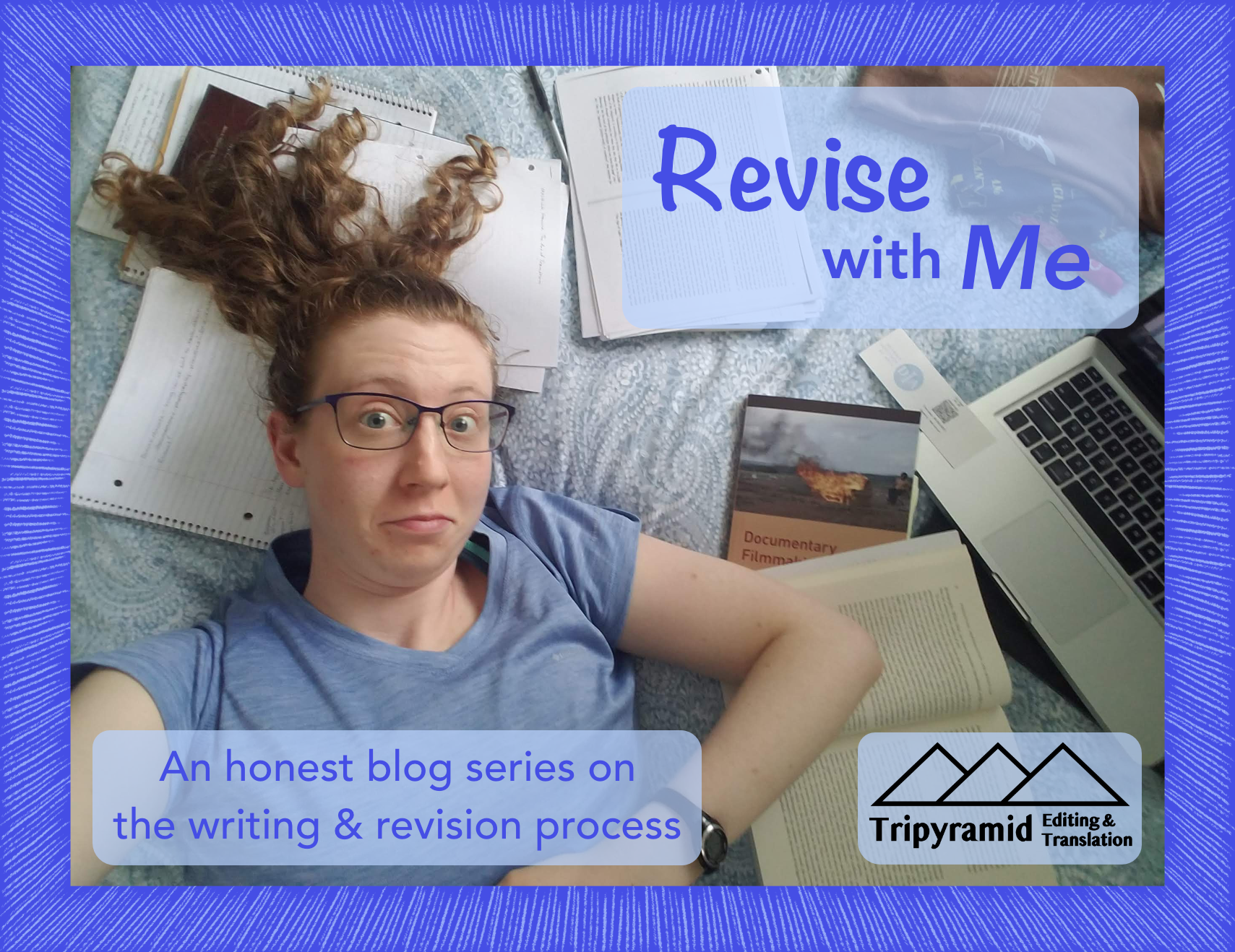
Speaking of emotions: I’d like to address the photo of myself that I chose for this blog series. First of all, I’m a little nervous that it exists on the internet at all, as it is kind of silly. But it’s the best (and possibly only) photo of my writing process that I have. Let me set the scene. It’s May 2020. The world is two months into a pandemic, and I am about a week into my doctoral candidacy exams (aka prelims/quals/comps), which in my program resulted in two long-form answers to essay questions over a few weeks. Maybe it wasn’t the best time to take prelims, but that was the hand I was dealt! I remember thinking I must look like a grad student cliché, sprawled on my bed surrounded by my laptop, books, notes, and photocopies of readings, so I took a selfie. The expression on my face is one that I think I make when I am undertaking a task but I’m not entirely sure I’m doing it right. It’s not panic or a complete lack of confidence, but more of an “is this something?” attitude. Much of my writing experience has felt like trial and error, because to get better at writing you have to keep doing it. So this photo seemed right for this blog series, a very literal representation of the uncertainty, experimentation, and organizational chaos that happens while writing.
What to expect from this series about the making of a journal article
In this series I’ll cover my process of creating a journal article out of existing writing, and I’ll expand on things that I think are relatable to people on their own writing journey. I’ll be working loosely off of the revision plan laid out in Wendy Belcher’s well-known and well-loved book, Writing Your Journal Article in Twelve Weeks. Apologies to Wendy if I take a lot of liberties with her carefully planned guidebook, which I have a lot of respect for. I think the idea is to make the plan work for you, so that’s what I’ll do. And I’ll make an effort to be honest about my missteps and challenges along the way.
Join me on the revision journey!
My own project is unique to me, but my hope is that this series lays out an honest perspective on the joys and challenges of the writing process. If you have writing you are looking to get published, I would love to connect over email or in the comments. The bar for reaching out is extremely low—drop a comment below, or send me an email about your own project and process (even if it is long after this blog has been published). As an editor, I am here to support writers. Even if we aren’t officially working together, the idea is to feel like part of a writing community and to not feel like you’re facing these challenges alone. So let me know what you’re working on!
And if you’d like to stay up to date on this series, make sure to scroll down and subscribe!